
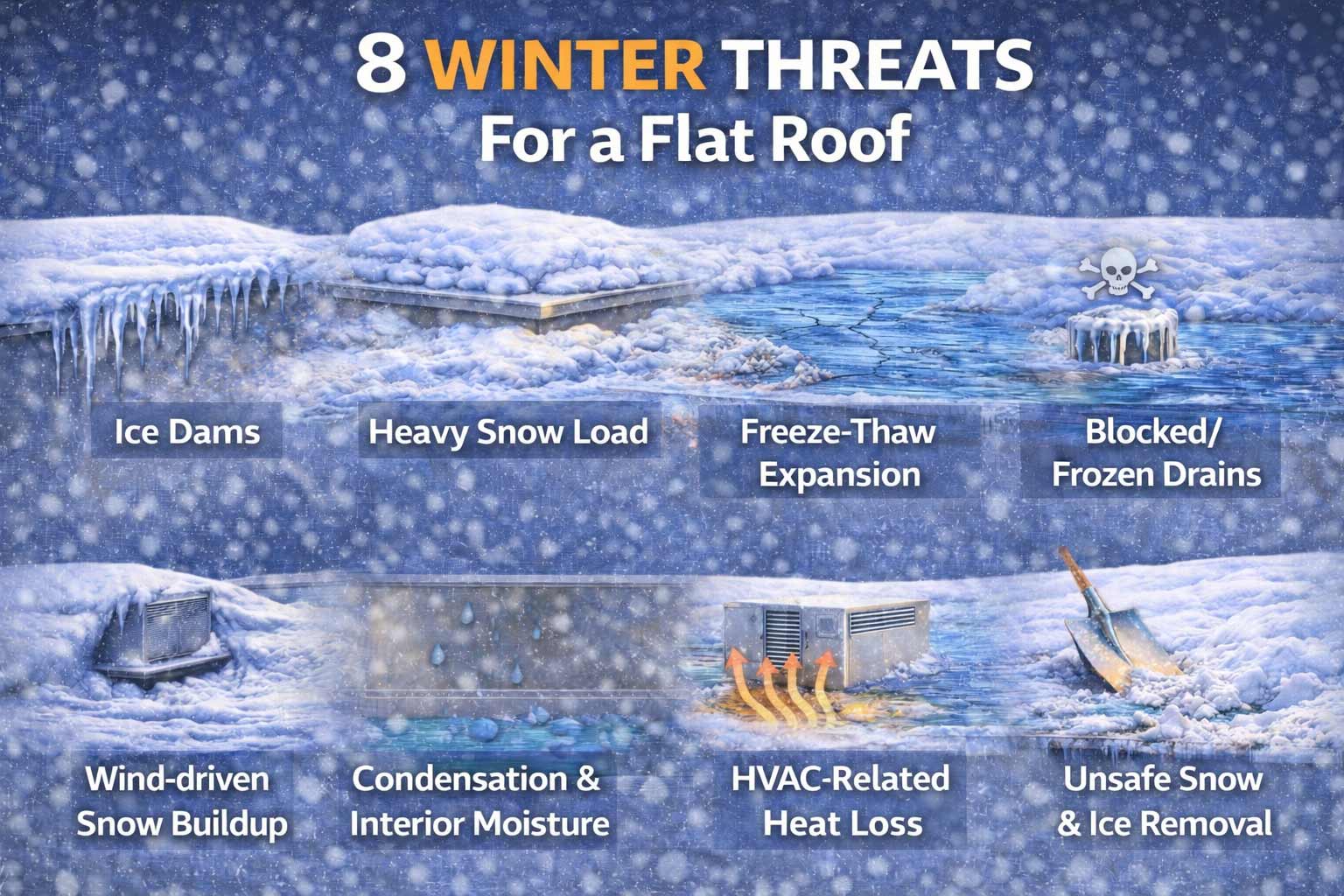
Winter is one of the most challenging seasons for flat roofs in Ontario. Heavy snowfall, freezing temperatures, and repeated thaw cycles create an environment where even small roofing weaknesses can become costly failures.
And while many building owners know about ice dams, that’s only one of several threats.
At Garcia Roofing, we want our clients to understand the full winter risk picture — in clear, practical language — so they can make informed decisions and protect their buildings year-round.
1. Ice Damming
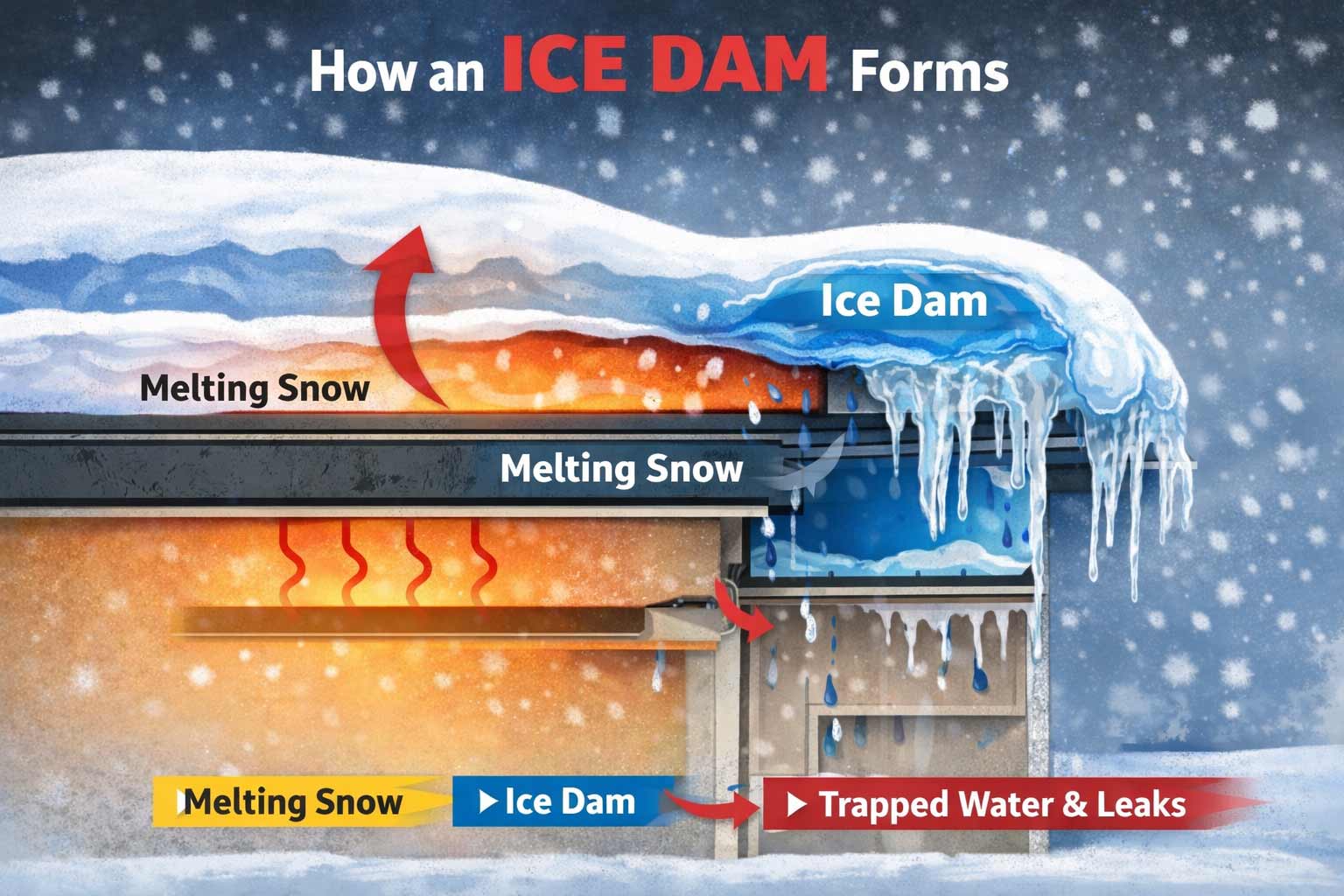
Ice dams form when heat escapes the building, melts snow, and refreezes near roof edges or drains. Over time, the ice blocks drainage and forces water into seams, membranes, and insulation.
Why it’s a risk:
Ice dams block the roof’s built-in drainage, leaving water with nowhere to go and over time, it can backup enough where eventually it finds a way inside the building.
2. Heavy Snow Load & Structural Stress
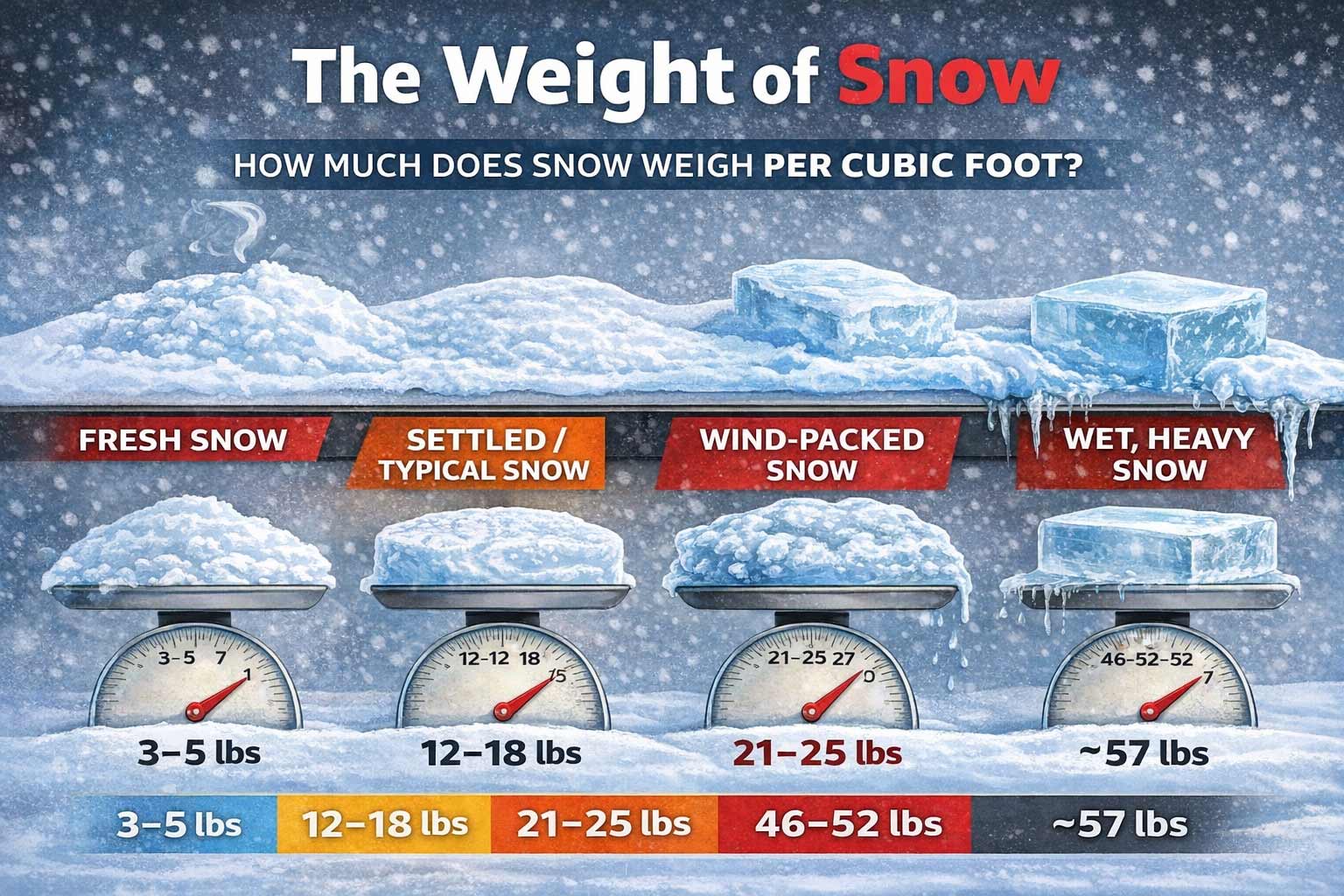
Snow is heavier than it looks. Don’t believe us? We’ve gone ahead and provided the facts thanks to InchCalculator.com.
Common snow weights by type:
| Snow Type | Density Range | |
| pounds per cubic foot | kilograms per cubic meter | |
| fresh & light | 3.12 – 4.37 lb/ft³ | 50 – 70 kg/m³ |
| settled | 12.49 – 18.73 lb/ft³ | 200 – 300 kg/m³ |
| wind-packed | 21.85 – 24.97 lb/ft³ | 350 – 400 kg/m³ |
| wet & slushy | 24.97 – 51.82 lb/ft³ | 400 – 830 kg/m³ |
| ice | 51.82 – 57.53 lb/ft³ | 830 – 920 kg/m³ |
Source: InchCalculator.com
Why it’s a risk:
We don’t expect you to constantly calculate the weight of the snow on your roof, but you should be aware that too much weight on your roof can overload structural supports, cause roof sagging and create dangerous situations if not addressed.
3. Freeze–Thaw Expansion
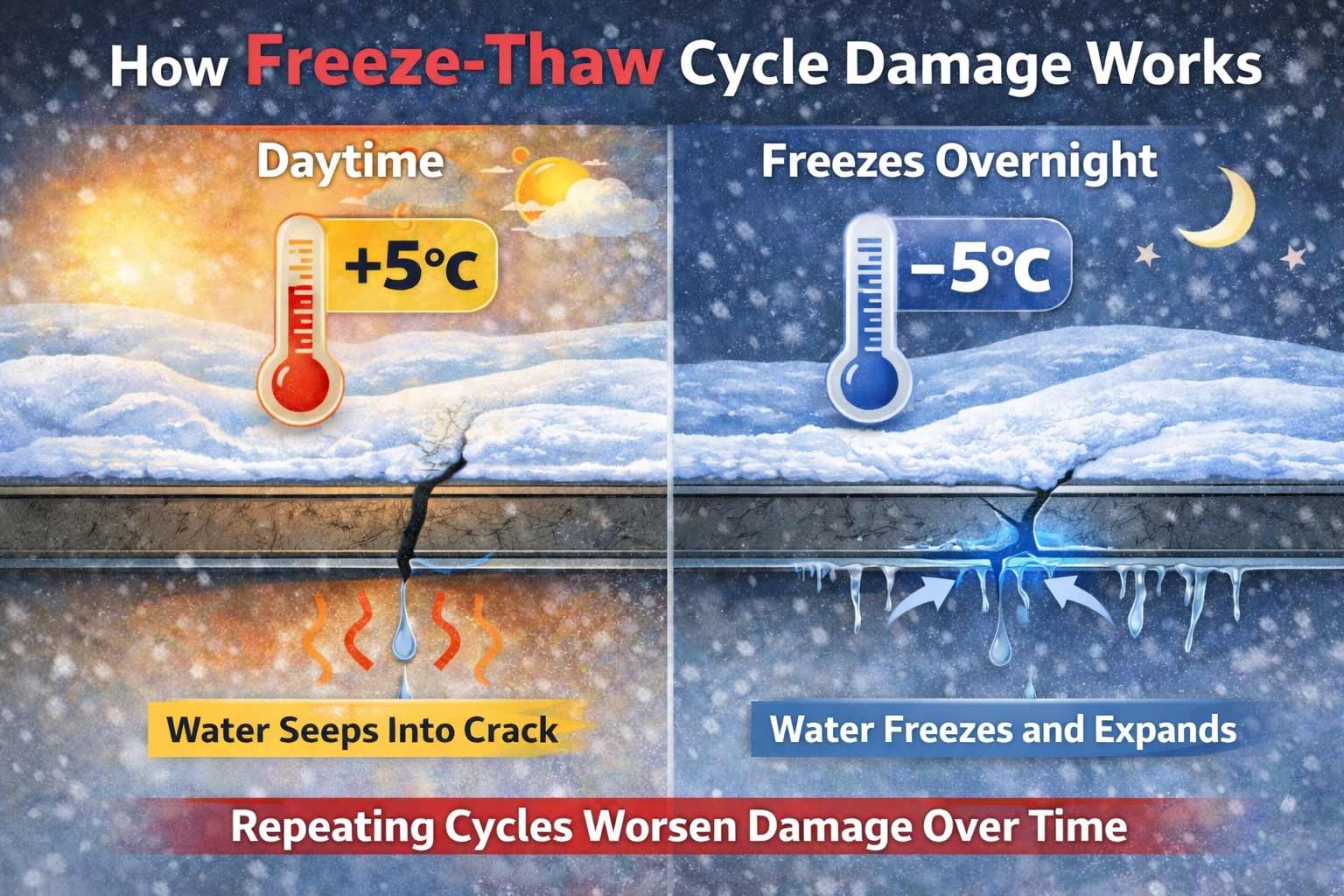
Water expands when it freezes, which is important to remember during winter in Ontario, because temperatures don’t always stay below freezing. When temperatures become mild mid-winter, the snow and ice on your roof will begin to thaw. If it seeps into tiny cracks or seams, and mild temperatures turn colder again, that water expands, making those cracks larger and separating weak seams.
Why it’s a risk:
Simply put, due to this freeze-thaw cycle, a tiny opening in November can be a major leak by March if it’s not addressed before winter.
4. Blocked or Frozen Drains
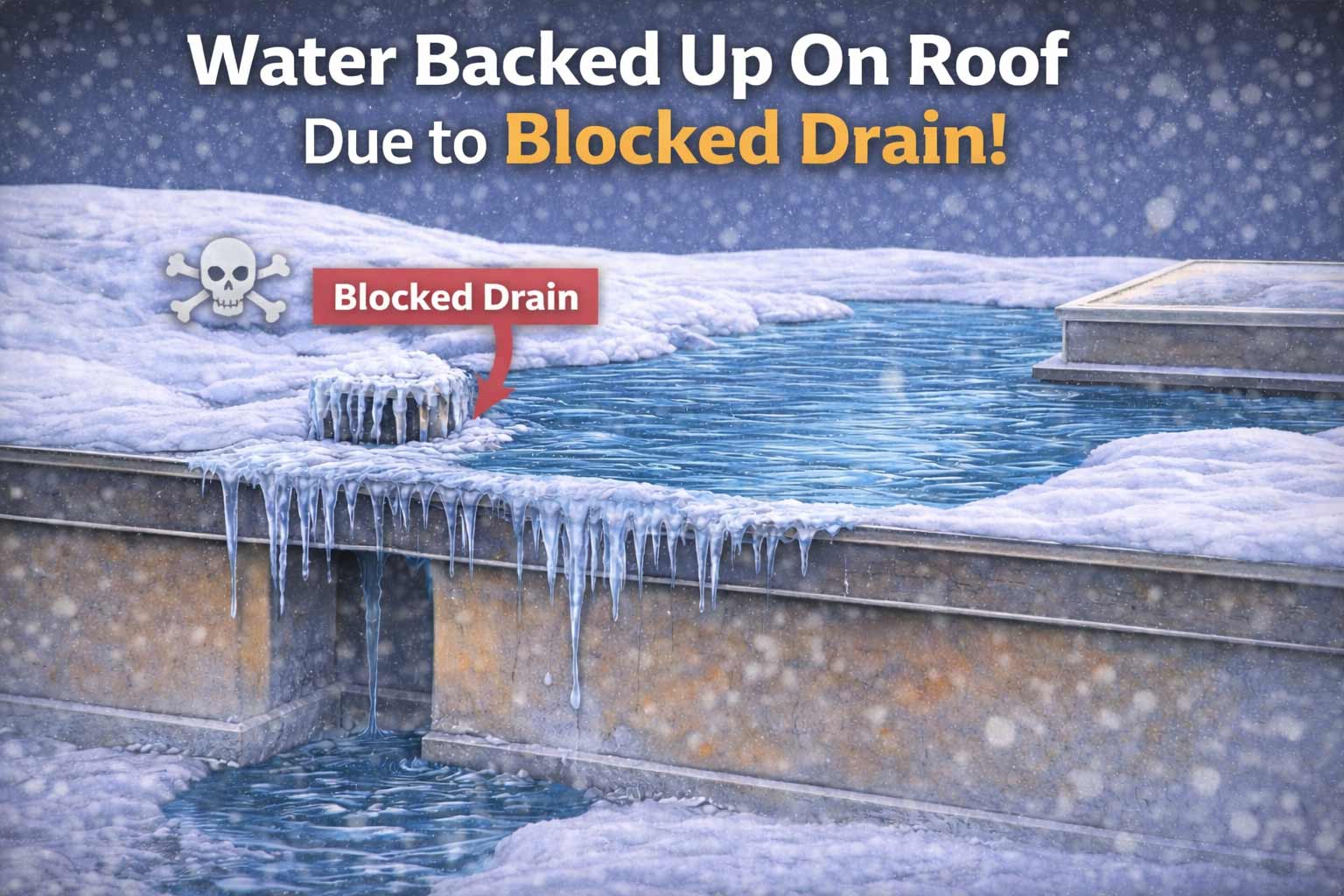
Flat roofs rely entirely on drainage systems. Similar to how Ice Dams can cause problems on your roof, frozen or clogged drains create ponding and ice buildup, which often become the root cause of winter leaks.
Why it’s a risk:
Blocked or frozen drains cause water to back up and pool leading to leaks indoors, which may be minor at first and go unnoticed, but can lead to worsening leaks, or mold.
5. Wind-Driven Snow & Ice Buildup
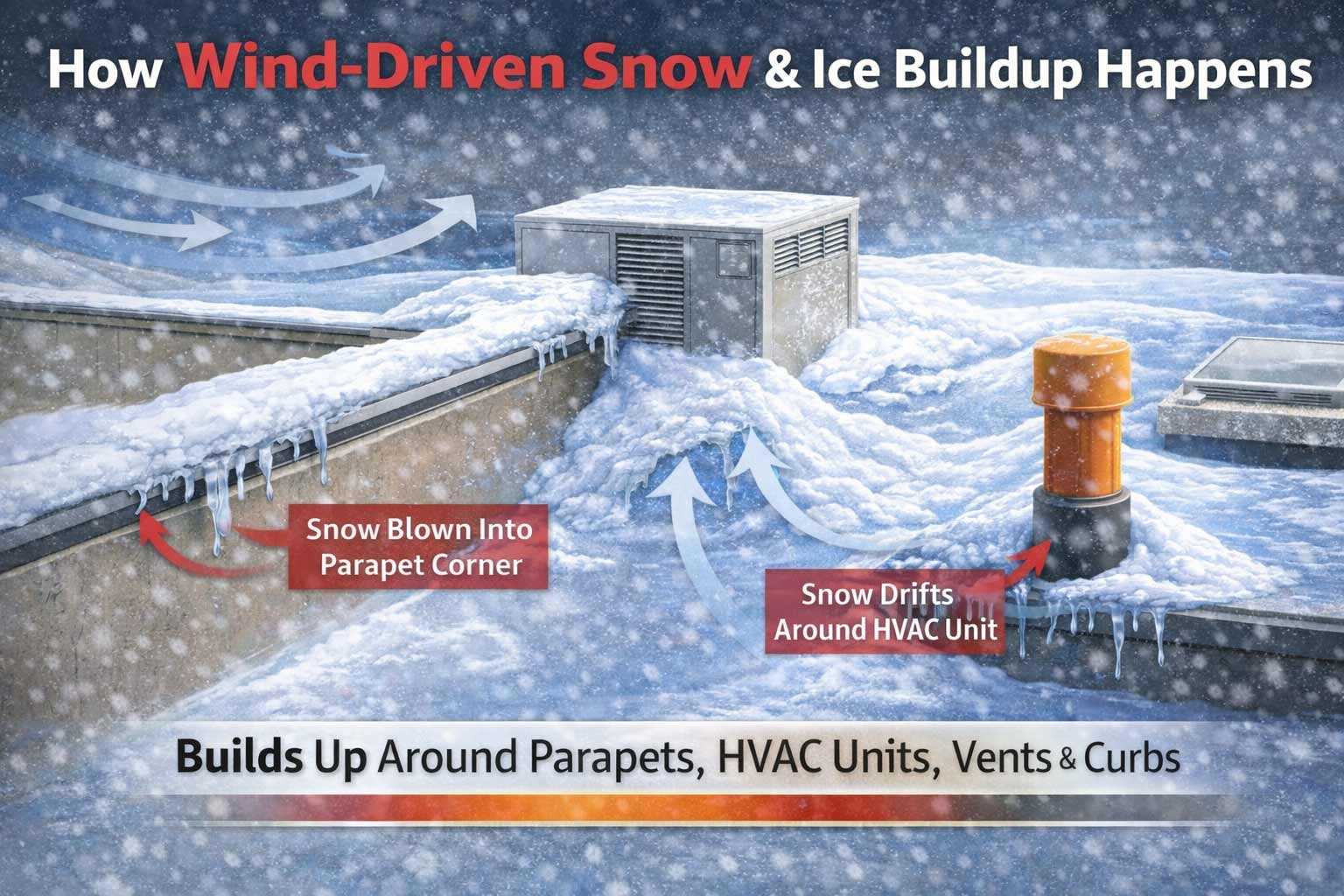
Strong winds can push snow into parapet corners, around HVAC units, or near skylights, creating uneven buildup and localized stresses in vulnerable areas that would otherwise not be susceptible to ice damming or backup from a blocked drain.
Why it’s a risk:
Snow doesn’t fall evenly, and stress points form where you least expect them. Equipment and other such structures on a flat roof can trap blowing snow, leading to higher levels at these areas.
6. Condensation & Interior Moisture
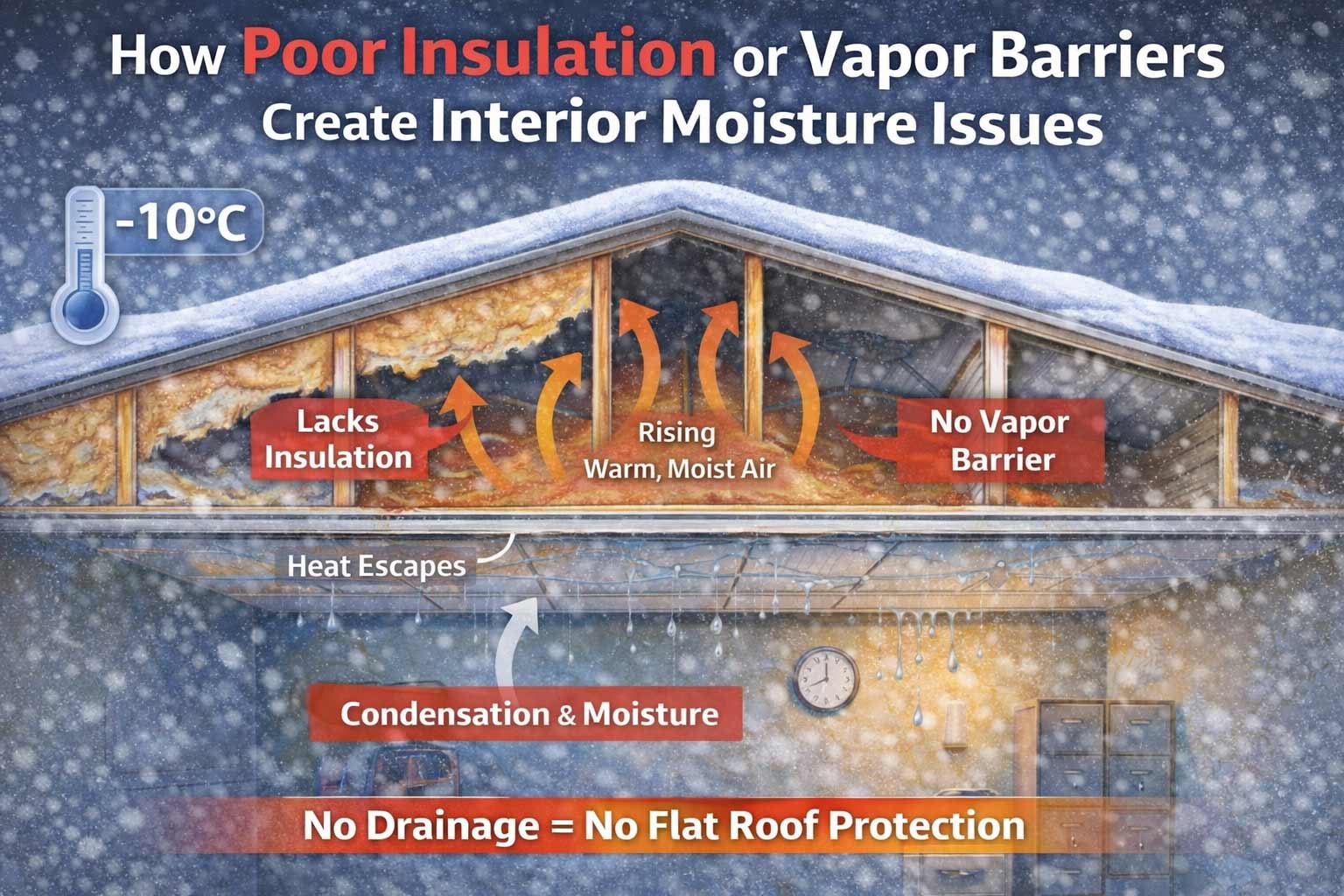
If insulation or vapor barriers are compromised in the winter, when warm indoor air meets cold exterior surfaces, it can lead to interior issues such as:
- Condensation
- Mold
- Wet insulation
- Ceiling damage
Why it’s a risk:
Something people sometimes forget is that leaks aren’t the only moisture problem — sometimes it’s condensation hiding inside due to poor or compromised insulation and vapor barriers.
7. HVAC-Related Heat Loss
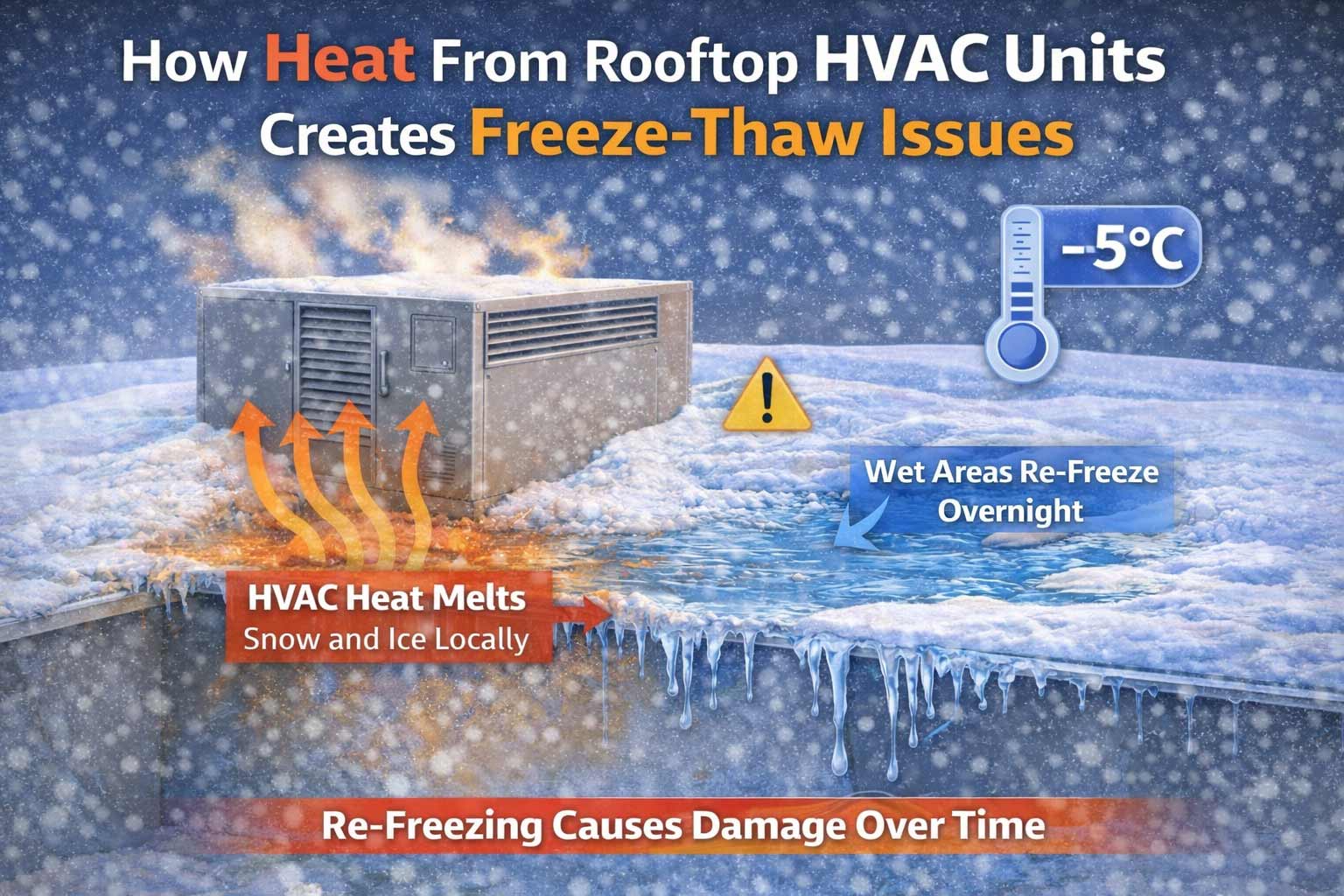
Natural freeze-thaw cycles aren’t the only kind of freeze-thaw issues rooftops encounter. Rooftop HVAC units can leak heat, accelerating freeze-thaw cycles around their bases and poor flashing or ignored roof problems around HVAC systems is a top winter leak point.
Why it’s a risk:
These types of man-made freeze-thaw cycles your rooftop equipment can cause may also create ice damming, or worsen penetrations, cracks and weak seams, but at an accelerated pace.
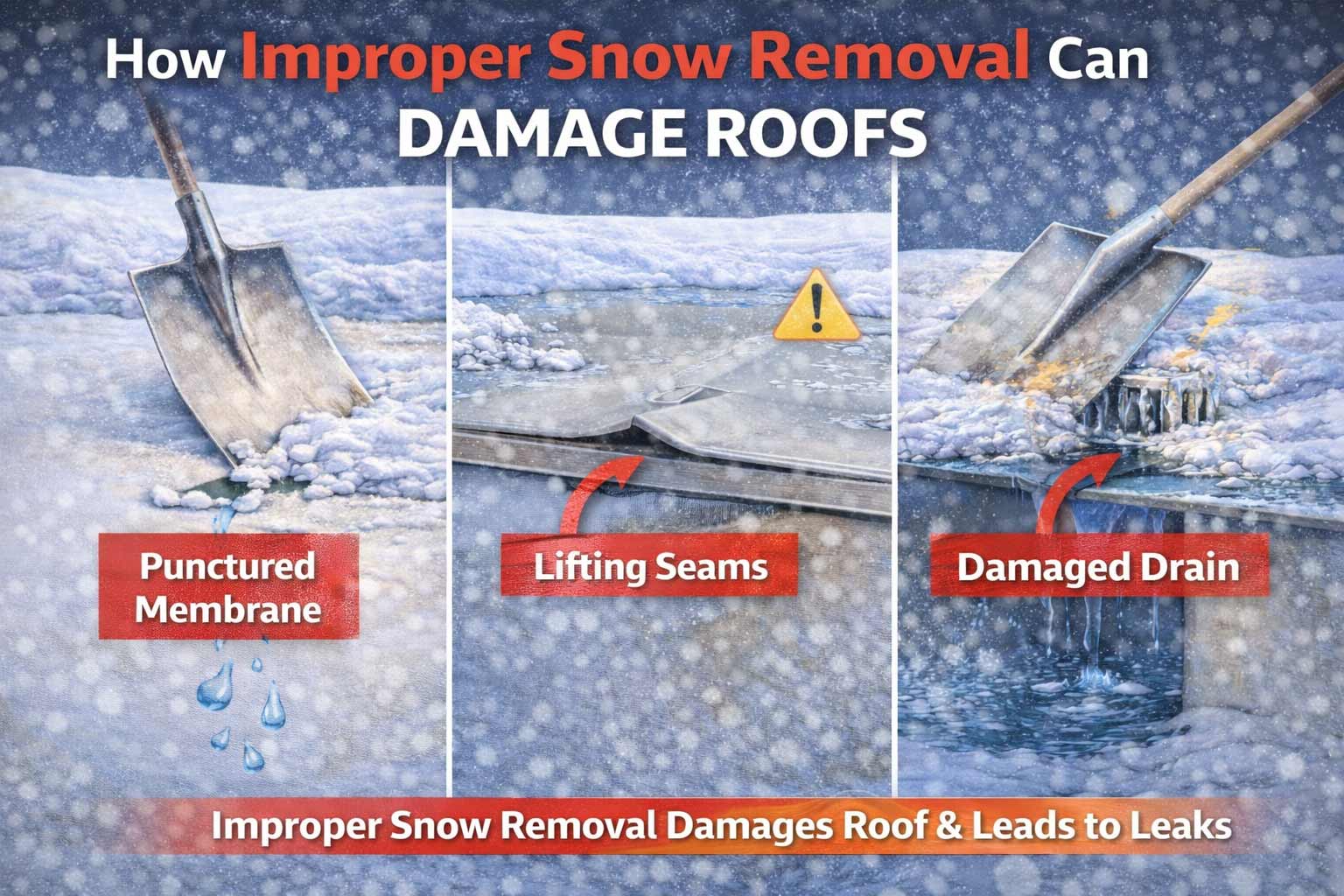
8. Unsafe Snow & Ice Removal
At Garcia Roofing, we recommend consistent snow removal for any flat roof. However, DIY snow removal or untrained crews can create a different set of problems, including:
- Punctured membranes
- Torn seams
- Damaged drains
Why it’s a risk:
Not only can one wrong shovel scrape cause thousands in damage, it can also void your roof warranty! Many manufacturer and installation warranties are hinged on proper maintenance, and not all maintenance is proper maintenance.
How Garcia Roofing Helps Prevent Winter Roof Damage
We support Ontario’s building owners, contractors, and property managers with:
- Certified winter inspections
- Proper preventative maintenance
- Safe snow & ice removal
- Drainage and insulation assessment
- Emergency leak response
And because we are trained and certified by leading manufacturers, our work is backed by warranty protection and best-practice installation standards. At Garcia Roofing, we’re not just here for today, we’re here for tomorrow as well.
