Hiring a roofing contractor is not just another service decision — it’s a long-term investment in the protection of your building. Here are the 7 steps to choosing the best roofing contractor in Ontario.
In Ontario’s climate, where roofs must withstand heavy snow, freeze-thaw cycles, high winds, and intense rainfall, the margin for error is small. Choosing the wrong contractor can lead to:
Premature membrane failure
Drainage issues
Voided warranties
Recurring leaks
Structural damage
The right contractor, on the other hand, delivers durability, compliance, and long-term value.
Here’s how to make the right decision.
1. Look for Manufacturer Certifications
One of the strongest indicators of a qualified contractor is manufacturer certification.
Certified contractors:
meet strict installation standards
receive ongoing technical training
follow approved system specifications
can offer stronger warranty options
When evaluating a roofing company, ask:
Which manufacturers are you certified with?
Are your installers trained for this specific system?
Can you provide documentation of certification?
Certified installers are held to higher accountability — and that directly benefits the building owner.
2. Verify Experience with Similar Projects
Not all roofing experience is equal.
A residential shingle contractor is not the same as a commercial flat roofing expert. If your building is commercial, industrial, or multi-unit residential, ensure the contractor has:
Experience with large-scale projects
Familiarity with flat roofing systems
Coordination experience with general contractors and property managers
Understanding of building code compliance
Ask for:
Project examples
References
Case studies
Experience in Ontario conditions matters.
3. Confirm Proper Insurance and Safety Compliance
Roofing is high-risk work. Professional contractors should carry:
Liability insurance
WSIB coverage
Working at Heights certification
Fall protection systems
Ask for documentation.
If a contractor hesitates to provide proof, that’s a red flag.
Safety compliance protects:
Your building
Your tenants
Your company
And the workers themselves
4. Evaluate Their Inspection Process
A reputable roofing contractor will not provide a vague estimate without a proper inspection.
A professional inspection should include:
Membrane condition assessment
Drainage evaluation
Flashing and penetration checks
Insulation considerations
Photo documentation
Be cautious of contractors who:
Immediately recommend full replacement without detailed assessment
Provide pricing without clear scope
Pressure you to sign quickly
The best contractors diagnose before they prescribe.
5. Review Their Online Reputation and References
Look for:
Consistent positive reviews
Detailed feedback, not generic comments
Long-term client relationships
Professional communication
Reputation is built over years — not months.
Check:
Google reviews
Industry affiliations
Manufacturer listings
Better Business Bureau profiles
6. Compare Quotes Carefully — Not Just Price
Price should not be the sole deciding factor.
When comparing quotes, review:
Scope of work
Materials specified
Warranty coverage
Disposal method
Timeline
Payment structure
The lowest price may exclude critical elements that result in higher costs later.
Look for clarity, transparency, and detail. If you have questions, don’t hesitate to ask them.
7. Choose a Contractor Focused on Long-Term Performance
The best roofing contractor doesn’t just install a roof — they support it over time.
Long-term support includes:
Preventative maintenance programs
Seasonal inspections
Emergency response readiness
Ongoing communication
Roofs are not “install and forget” systems. Long-term relationships matter.
Why Ontario Property Owners Choose Garcia Roofing
Garcia Roofing works with:
Builders & Developers
Property management companies
Commercial building owners
General contractors
Our team brings:
Manufacturer certifications
Large-scale project experience
Strict safety compliance
Detailed inspection processes
Long-term maintenance support
We approach every project with the understanding that roofing is a structural investment — not a short-term fix.
When selecting a contractor, experience, accountability, and professionalism make the difference.
We’re not just here for today — we’re here for tomorrow as well.
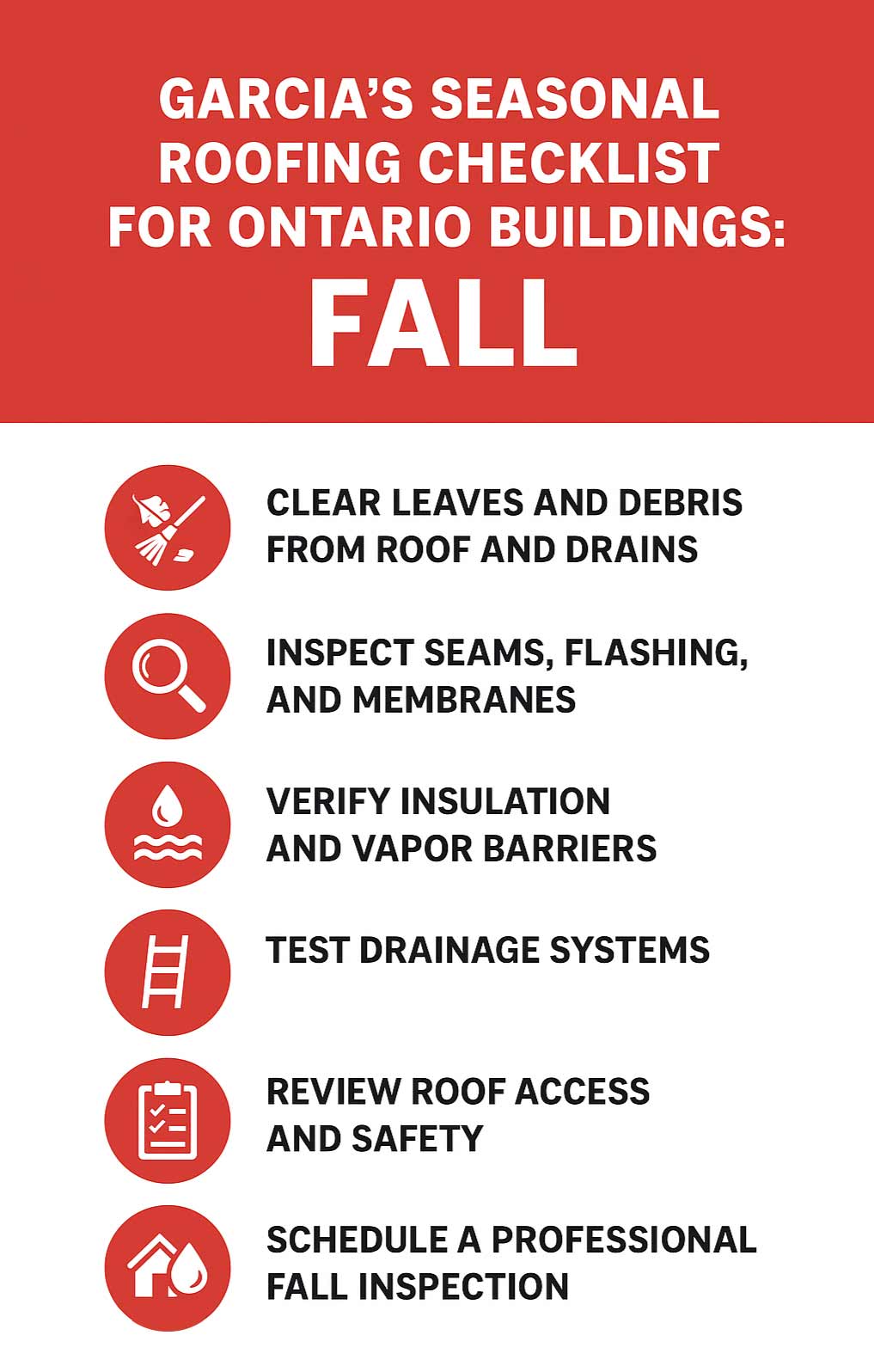
As September turns into October, Ontario building owners face one of the most important times of year for roof maintenance. Fall is a critical transition season: the last chance to prepare your roof for snow, ice, and freeze-thaw cycles.
At Garcia Roofing, we’ve seen how a few hours of preventative care in the fall can save thousands in emergency repairs over the winter. Here’s our certified fall roofing checklist.
1. Clear Leaves and Debris from Roof and Drains
Leaves, branches, and dirt collect quickly in the fall. If drains, scuppers, or gutters clog, water will pool, freeze, and damage membranes. Clear everything now before the first freeze.
2. Inspect Seams, Flashing, and Membranes
Fall’s freeze-thaw cycles put stress on roof seams. Check for:
Lifting flashing
Cracked sealant
Separated seams
Bubbles or blisters in the membrane
If you spot issues, call a professional before snow sets in.
3. Verify Insulation and Vapor Barriers
Heat loss from poor insulation can cause ice dams and condensation. Inspect insulation for wet spots or compression and ensure vapor barriers are intact.
We often find that small insulation upgrades in fall lead to lower heating costs and fewer winter leaks.
4. Test Drainage Systems
Pour water into roof drains to confirm proper flow. Look for signs of slow drainage or leaks around drain connections. Blocked drainage is one of the top causes of flat roof failures in winter.
5. Review Roof Access and Safety
Fall is the best time to make sure:
Roof ladders, hatches, and walkways are safe
Snow guards and rails are secure
Contractors and maintenance staff know safe access protocols
Safety reduces liability and ensures winter snow removal can be performed quickly and safely.
Bonus Tip: Schedule a Professional Fall Inspection
A fall inspection by certified professionals ensures nothing is missed. At Garcia Roofing, our fall service includes:
Comprehensive membrane and flashing check
Drain and scupper clearing
Sealant touch-ups
Snow load readiness review
A written condition report
We’re not just here for today, we’re here for tomorrow as well.
When water starts dripping or shingles blow off in a storm, it’s natural to want a quick fix. But when it comes to roofing—especially in Ontario’s unpredictable climate—rushing a decision can cost you thousands.
At Garcia Roofing, we’ve seen firsthand how slowing down, asking the right questions, and comparing quotes can make the difference between a fair investment and unnecessary overspending.
A Real Story: How One Client Saved Thousands
Recently, a local property owner contacted a competitor about what seemed like a minor roofing issue. The contractor inspected the roof and quickly claimed it needed a full replacement.
The client was pressured into leaving a $2,000 deposit—without even knowing the final cost. When the full price was revealed at over $18,000, the client called Garcia Roofing for a second opinion.
Our certified team inspected the roof, provided a transparent assessment, and delivered a better price—even if the client couldn’t recover their initial deposit.
The lesson? Don’t panic. Always get more than one opinion.
Why Fall Is a Risky Time to Rush Roofing Decisions
Fall is one of the busiest times for Ontario roofing contractors. With winter around the corner, many companies try to fill their schedules—and some unfortunately pressure property owners into quick, expensive commitments.
This seasonal “frenzy” can lead to:
Inflated quotes
High-pressure sales tactics
Rushed workmanship
Deposits taken without transparency
While urgent repairs sometimes can’t wait, full roof replacements rarely need to be decided on the spot.
How to Protect Yourself as a Property Owner
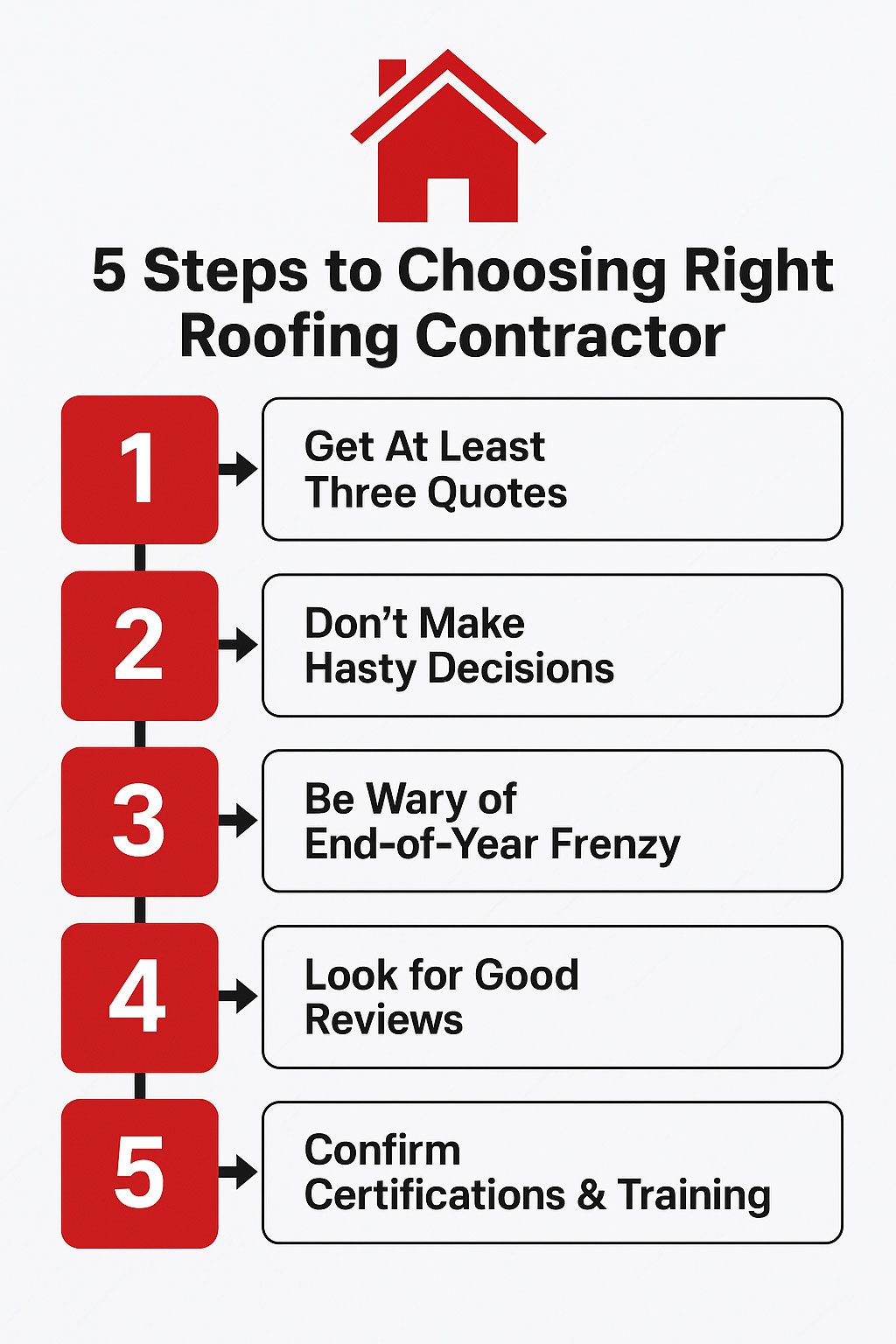
Slowing down and doing your homework makes all the difference. Garcia Roofing recommends:
1. Get At Least Three Quotes
Compare pricing, timelines, and materials side by side. Look for clear breakdowns.
2. Check Certifications and Training
Certified contractors meet higher standards and often provide access to extended warranties.