A commercial roof is expected to protect a building for decades, yet it is often one of the least observed parts of the property. Mechanical equipment gives warning signs when it begins to fail. Interior finishes show wear. A flat roof can continue to look serviceable from a distance while a blocked drain, an opening at a flashing, or a small puncture allows moisture to move into the roofing assembly.
That is why a roof inspection matters. It is not simply a search for an active leak. A useful inspection explains how the roof is aging, which conditions require attention now, which ones should be monitored, and what the owner should reasonably expect over the next several years. The value is not in producing a long list of defects. The value is in giving the person responsible for the building enough information to make a sound decision.
For property owners and facility managers, that distinction is important. Roofing is rarely the most interesting item on a capital plan, and it should not need to be. A well managed roof is usually quiet. It drains properly, receives targeted repairs when needed, and reaches the later years of its service life without creating avoidable emergencies inside the building.
Garcia Roofing approaches inspections from that practical perspective. The objective is to protect the building, preserve the roof where it makes financial sense, and identify replacement planning early enough that the owner is not forced into a rushed decision after a failure.
| THE CENTRAL IDEA A roof inspection should reduce uncertainty. When it is complete, the owner should understand the present condition of the roof, the consequences of leaving identified issues alone, and the most sensible order in which to address them. |
Why a Roof Can Have a Problem Before the Building Has a Leak
Water appearing on a ceiling is a late symptom, not an early warning. On many commercial roofs, moisture enters at one location and travels through insulation, along deck flutes, or around structural components before it becomes visible inside. The stain in a tenant space may be some distance from the point where water first entered the roof.
This delay creates a false sense of security. A roof may not be leaking into occupied space, but that does not necessarily mean the assembly is dry or undamaged. Insulation can become wet, fasteners can corrode, and repeated freeze and thaw cycles can enlarge a small opening. By the time the interior provides clear evidence, the repair may involve more than resealing a detail on the surface.
Regular inspections are intended to find the earlier indicators. These can include a seam that is beginning to open, deteriorated sealant around a penetration, displaced metal, debris restricting a drain, or membrane damage near equipment that has recently been serviced. None of these conditions automatically means the roof requires replacement. Most are manageable when they are found early and repaired appropriately.
The Canadian Roofing Contractors Association recommends planned roof inspections in the spring and fall. That schedule is particularly sensible in Ontario because each inspection answers a different question. The spring visit shows how the roof came through winter. The fall visit confirms that drainage, flashings, and vulnerable details are ready for the next period of snow, ice, and temperature cycling.
How Often Should a Commercial Flat Roof Be Inspected?
For most commercial buildings, two professional inspections each year provide a reasonable baseline. Spring and fall are useful because they bracket Ontario’s most demanding season, but the calendar is only part of the decision. A roof should also be reviewed after events that could have changed its condition.
A severe wind or hail event is an obvious reason. Rooftop work is another. Heating and cooling technicians, electricians, communications contractors, window cleaners, and solar installers may all need access to the roof. Most work carefully, but roofing membranes are not designed to be used as general work platforms. A dropped tool, a sharp equipment panel, displaced protection pad, or poorly sealed new penetration can create a problem that is not visible from inside the building for months.
An additional inspection may also be appropriate before a property transaction, before a major renovation, or while preparing a multi year capital plan. In those cases, the purpose extends beyond maintenance. The owner may need an informed estimate of remaining service life, likely repair obligations, and the timing of a future replacement.
There is no benefit in treating twice a year as an inflexible rule. A newer roof with limited traffic and complete records may require less investigative work than an older roof with repeated repairs, extensive equipment, or uncertain history. The inspection program should reflect the building, the roof system, its age, and the consequences of a leak in the space below.
| GARCIA’S INSIGHT One of the most useful inspection questions is not simply, “Is the roof leaking?” It is, “What has changed since the last time someone qualified looked at it?” A consistent photographic record makes that comparison possible. |
A Good Inspection Starts Before Anyone Steps onto the Roof
The roof surface is only one part of the investigation. A competent inspector begins by understanding the building and the reason for the visit. If there has been water entry, the location, timing, weather conditions, and history of previous repairs can narrow the search considerably. If the inspection is preventive, existing drawings, warranty documents, repair invoices, and earlier reports provide context that cannot be recovered by looking at the membrane alone.
The interior should also be considered. Water staining, damaged ceiling materials, unusual odours, corrosion, and changes around roof drains or structural members may help identify an issue that is not obvious outside. In warehouse and industrial buildings, the underside of the deck can sometimes reveal patterns of moisture or condensation that would otherwise be attributed to a roof leak.
This matters because not every moisture problem begins with the roofing membrane. Condensation, plumbing, mechanical equipment, wall transitions, and rooftop units can all produce symptoms that resemble a roof failure. A thoughtful inspection separates those possibilities rather than assuming that every stain requires the same repair.
What a Professional Flat Roof Inspection Examines
Once on the roof, the inspector is looking at the assembly as a connected system. The field membrane may cover most of the area, but problems are more likely to develop where materials change direction, meet another component, or are interrupted by equipment. The inspection therefore moves between broad roof conditions and specific details.
The membrane is reviewed for visible deterioration, punctures, blisters, open laps, surface wear, displaced materials, and previous repairs. The significance of those findings depends on the roof type. A modified bitumen roof, for example, is assessed differently from a single ply membrane, even though both rely on sound seams, secure transitions, and effective drainage.
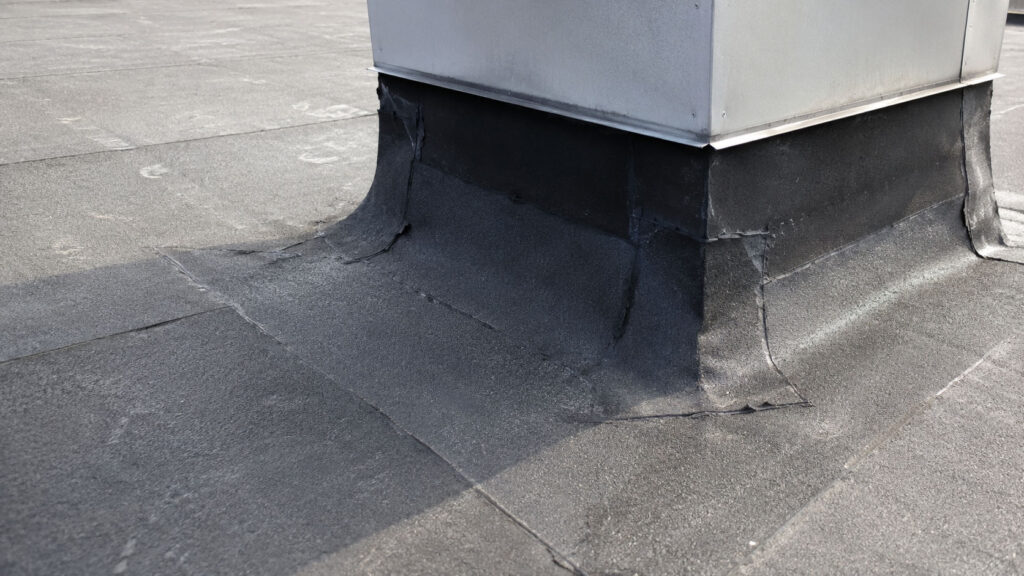
Flashings receive close attention because they protect changes in plane and the edges of penetrations. Parapet walls, curbs, pipes, vents, skylights, expansion joints, and transitions to adjacent walls all depend on flashing details. Movement in the building, ultraviolet exposure, repeated temperature changes, and work by other trades can place stress on those areas long before the main field of the roof appears worn.
Metal components are checked for movement, open joints, corrosion, missing fasteners, and failed sealants. Copings and perimeter details are particularly important because they are exposed to wind and often form part of the building’s first line of defence against water entry at the roof edge.
The inspector also looks at traffic patterns. A narrow route between an access hatch and a rooftop unit can reveal more about the roof’s risk than a large untouched area. If technicians regularly cross the same membrane without suitable walk pads, surface wear or small punctures may continue to recur even after individual repairs are completed.
Drainage Deserves More Attention Than It Usually Receives
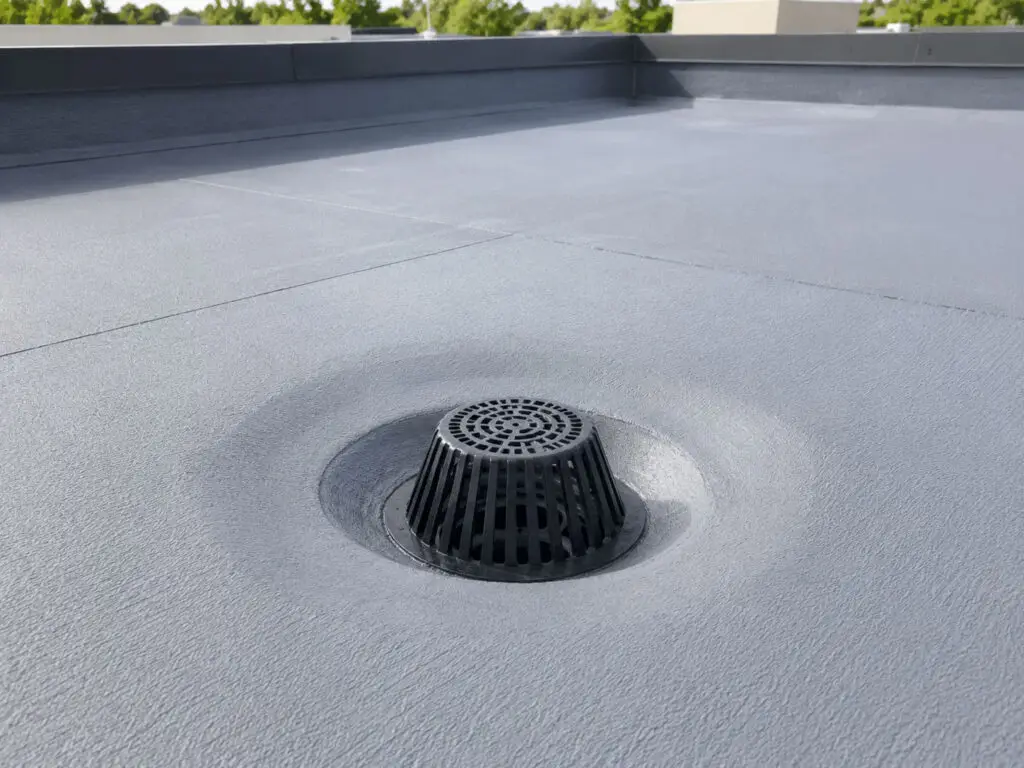
A flat roof is not intended to be perfectly level. It is designed as a low slope roof, with water directed toward drains, scuppers, or other outlets. When water remains on the surface for extended periods, the issue is not merely cosmetic. Standing water adds load, collects debris, encourages biological growth, and increases the time that vulnerable details remain wet.
The inspection should therefore consider more than whether the drain opening is clear on the day of the visit. Drain baskets, strainers, scuppers, gutters, and overflow provisions should be present, secure, and unobstructed. The surrounding membrane should be sound, and the roof should direct water toward the outlet rather than trapping it behind equipment, insulation transitions, or settled areas.
Some temporary water after a heavy rain is normal, particularly while the drainage system is still clearing. Persistent ponding is different. It can be caused by blocked outlets, inadequate slope, structural deflection, compressed insulation, poorly placed equipment, or earlier repairs that changed the surface profile. The appropriate response depends on the cause. Clearing a drain may solve one condition, while another may require tapered insulation, drainage modifications, or more extensive rehabilitation.
National Research Council guidance has long emphasized the importance of positive drainage on low slope roofs. For an owner, the practical conclusion is straightforward: water should have a reliable path off the roof, and that path should be checked before the next major storm exposes a weakness.
| COMMON MISTAKE Owners sometimes treat ponding water as harmless because the membrane is designed to be waterproof. The membrane is only one part of the system. Persistent water can expose weak details, increase loading, hide damage, and shorten the useful life of affected areas. |
Ontario Weather Changes What Inspectors Look For
Ontario roofs experience conditions that place different types of stress on the same assembly. Summer heat can raise surface temperatures substantially. Winter introduces snow, ice, and prolonged cold. Spring and fall can move above and below freezing repeatedly, allowing water in a small opening to freeze, expand, thaw, and move deeper into the assembly.
An inspection after winter may reveal displaced metal, cracked sealant, membrane movement, damaged drains, or areas affected by snow removal. It may also identify debris that accumulated beneath snow and now restricts drainage. A fall inspection has a more preventive purpose. It confirms that outlets are clear, vulnerable details remain secure, and repairs can be completed before cold temperatures limit material performance or make access more difficult.
Snow load is a separate structural concern. A roofing contractor can identify visible conditions and advise when snow management is prudent, but questions about structural capacity may require an engineer. The Ontario Ministry of Labour has specifically warned that snow accumulation can exceed the capacity of some buildings. A responsible inspection recognizes the boundary between roofing work and structural evaluation rather than offering certainty where specialist input is required.
The Inspection Report Should Help You Make a Decision
A report is useful only when it translates observations into priorities. A folder of photographs without context may document the roof, but it does not tell the owner what to do next. Each significant finding should explain where the condition is located, why it matters, what action is recommended, and how urgent that action is.
The clearest reports separate immediate repairs from maintenance items and longer term planning. An active opening beside a roof drain may require prompt attention. A weathered coating or older repair may be serviceable today but worth monitoring. A roof approaching the end of its useful life may need targeted repairs now while replacement is budgeted for a later year.
That distinction prevents two common outcomes. The first is underreaction, where every recommendation is postponed because the report feels too broad or expensive. The second is overreaction, where an owner is led to believe that any defect means the entire roof must be replaced. Commercial roofs are rarely that simple. Different areas can age at different rates, and the right plan may combine repair, observation, and capital planning.
A credible report should also acknowledge limitations. Some conditions cannot be confirmed visually. If moisture beneath the membrane is suspected, further investigation may involve test cuts, moisture scanning, or other diagnostic methods. Those steps should be recommended for a reason, not included automatically as a way to make the inspection appear more technical.
How to Read the Findings
The following framework is not a substitute for professional judgment, but it shows how inspection findings can be organized into practical decisions rather than a single undifferentiated repair list.
| Finding category | Typical meaning | Likely response | Planning horizon |
| Active water entry or open detail | The roof is no longer reliably controlling water at a specific location. | Protect the interior, identify the entry point, and complete a compatible repair promptly. | Immediate |
| Localized deterioration | A limited area is aging or damaged, while surrounding roof remains serviceable. | Repair the affected area and document it for the next inspection. | Near term |
| Maintenance condition | The roof is functioning, but debris, sealant, traffic protection, or minor detail work needs attention. | Complete routine maintenance before the condition develops into damage. | Scheduled maintenance |
| Recurring issue | The same location has failed more than once or the underlying cause has not been corrected. | Investigate drainage, movement, design, or adjacent components rather than repeating the same surface repair. | Near term investigation |
| Widespread aging | Multiple areas show declining performance and repairs are becoming less durable or more frequent. | Maintain critical areas while preparing a replacement scope and capital budget. | Capital planning |
Repairs, Maintenance, and Replacement Are Different Decisions
An inspection should not begin with a predetermined sales outcome. Some roofs need a small repair. Some need a structured maintenance program. Others have reached a point where continuing to patch isolated symptoms is no longer the best use of the owner’s money.
The decision depends on the extent of moisture, the condition of the insulation and deck, the age and type of the roof, the durability of previous repairs, warranty requirements, and the owner’s plans for the building. A property that will be redeveloped in three years may justify a different strategy from a long term institutional facility where disruption is costly and predictable performance is essential.
Cost should be considered over time rather than only at the next invoice. A modest repair that extends a sound roof is usually valuable. Repeating short lived repairs across a broadly deteriorated system can become expensive without materially reducing risk. The inspection should help the owner see that difference before urgency removes the opportunity to plan.
Records Protect More Than the Warranty
Roof warranties often require owners to maintain the system and address damage in a timely manner. The exact obligations vary by manufacturer and warranty, so the documents should be reviewed rather than assumed. Inspection reports, repair invoices, photographs, and records of rooftop work can help demonstrate that the roof has been managed responsibly.
The same records are valuable even when no warranty claim is involved. They establish a history for future contractors, support capital planning, and help distinguish a new condition from one that has remained stable for several years. When a property is sold, leased, refinanced, or renovated, organized roof records reduce uncertainty for everyone evaluating the building.
A simple roof log can be effective. It should record inspection dates, reported leaks, repairs, storms, equipment installations, and any person or contractor who accessed the roof for significant work. The goal is not administrative complexity. It is to preserve information that would otherwise be lost when staff, tenants, or service providers change.
When an Inspection Should Not Wait
Routine inspections can be scheduled, but some conditions justify quicker action. Interior water entry, visible membrane displacement, damage after severe weather, overflowing drains, loose perimeter metal, and signs that rooftop equipment has shifted should be reviewed promptly. So should any new penetration or equipment installation if the roofing details were not completed or verified by a qualified roofing contractor.
Safety comes first. Building staff should not walk onto a wet, icy, snow covered, or unfamiliar roof to investigate a problem. Skylights, roof edges, hidden openings, electrical equipment, and unstable surfaces can create serious hazards. Ontario safety requirements apply to work on commercial roofs, and access should be limited to people who are trained, equipped, and authorized for the conditions.
The immediate objective during an active leak is to protect people, equipment, inventory, and interior finishes while arranging a qualified assessment. Buckets and temporary interior measures can reduce damage, but they do not identify the source or make the roof watertight.
Choosing the Right Company to Inspect a Commercial Roof
Commercial flat roofing is a specialized field. The person inspecting the roof should understand the installed system, recognize compatible repair methods, and be able to distinguish a localized defect from broader system decline. Experience with sloped residential roofs does not automatically provide that knowledge.
The quality of the report is also revealing. A useful inspection explains conditions in plain language, includes clear photographs, identifies priorities, and discusses reasonable options. It should not rely on fear, vague statements, or technical terms that leave the owner more confused than before the visit.
Garcia Roofing works with modified bitumen, TPO, EPDM, PVC, and other commercial flat roofing assemblies across Ontario. The company holds seven manufacturer certifications, which supports current product knowledge and system specific installation practices. More importantly, the inspection is approached as a building management decision. The recommendation should fit the condition of the roof and the owner’s plans, not simply the largest available scope of work.
| GARCIA’S APPROACH The best inspection does not create urgency where none exists. It identifies real risk, explains the consequences, and gives the owner a practical sequence for repair, maintenance, and future planning. |
Frequently Asked Questions
How long does a commercial roof inspection take?
The time depends on the roof area, access, number of penetrations, system complexity, available records, and whether the inspection is preventive or related to an active leak. A small, accessible roof may be reviewed relatively quickly. A large industrial building with several roof sections, extensive equipment, and a history of repairs requires more time if the report is expected to be useful.
Can a roof be inspected in winter?
Yes, but snow, ice, low temperatures, and unsafe access can limit what can be observed. A winter visit may still be necessary during an active problem, while a complete condition assessment may need to be supplemented when the surface is clear and safely accessible.
Does a roof inspection include a leak guarantee?
An inspection documents visible conditions and may identify likely sources of water entry. It cannot guarantee that every concealed condition will be found without further investigation. Where moisture is suspected beneath the surface, test cuts, scanning, or additional diagnostic work may be recommended.
Is an inspection still necessary for a newer roof?
Yes. Newer roofs can be damaged by storms, rooftop traffic, mechanical work, or changes to equipment. Early inspections also establish a photographic baseline and help ensure that maintenance obligations associated with the warranty are understood.
Should the roof be inspected after HVAC work?
It is sensible when equipment has been replaced, curbs or penetrations have been altered, or technicians have performed substantial work on the roof. The roofing details should be checked for damage, displaced protection, loose materials, and proper sealing.
How much does a commercial roof inspection cost?
Pricing depends on the size and complexity of the building, travel, access, reporting requirements, and whether diagnostic testing is included. The useful comparison is not simply the lowest inspection price. It is the quality of the assessment and whether the resulting information helps avoid unnecessary repairs, missed damage, or an unplanned replacement.
Can routine inspections extend roof life?
The inspection itself does not extend the life of the roof. The benefit comes from acting on what the inspection reveals. Clearing drainage, repairing small openings, protecting traffic areas, and correcting vulnerable details can prevent localized conditions from causing broader damage.
A Roof Inspection Is Really a Planning Tool
Property owners do not need to become roofing experts. They need reliable information at the right time. A consistent inspection program provides that information while there are still options available.
It can show that a roof is performing well and needs only routine care. It can identify a limited repair before moisture spreads into insulation. It can also provide enough warning to plan a replacement properly, compare systems, coordinate with other building work, and budget the project without the pressure of an emergency.
That is the practical purpose of a commercial flat roof inspection. It protects the building today while giving the owner a clearer view of what comes next. At Garcia Roofing, that long term view is part of every recommendation.
We’re not just here for today, we’re here for tomorrow.